Strategic Analysis Report on Taiwan Machine Tool Components Entering the Indian Machine Tool Market
To assess these opportunities, this report first examines relevant industries. According to market data from IMARC Group (Table 1), major sectors in India, including automotive and consumer electronics, have large market sizes, while semiconductors, data centers, and robotics demonstrate strong growth potential.
| Industry | 2025 Market Size (USD Billion) |
2034 Forecast Market Size (USD Billion) |
CAGR (CAGR) |
|---|---|---|---|
| Automobile | 1,430.0 | 2,785.0 | 7.3% |
| Defense | 183.2 | 300.8 | 5.7% |
| Aircraft Components | 173.0 | 313.0 | 6.1% |
| Construction Equipment | 153.7 | 295.0 | 7.5% |
| Consumer Electronics | 894.8 | 1,584.4 | 6.6% |
| Semiconductor | 597.8 | 1,802.0 | 12.0% |
| Data Center | 55.5 | 131.1 | 10.0% |
| Robotics | 19.8 | 73.8 | 15.7% |
| Drones | 13.2 | 27.3 | 8.5% |
Note: CAGR projections are based on the period from 2026 to 2034.
Source: Compiled from IMARC Group industry research summaries (2025-2026).
Analysis of Major Industries in India
This report focuses on the automotive, aerospace components, and drone industries, as these sectors offer both a solid market foundation and growing demand for technological upgrades.
(1) Automotive Industry
According to the market summary published by IMARC Group (2026a), India's automotive market in 2025 is dominated by conventional fuel-powered vehicles, accounting for 82.4% of the market. Other vehicle categories include electric vehicles, hybrid vehicles, hydrogen fuel cell vehicles, and gas-powered vehicles (Figure 1). In addition, through its Production Linked Incentive (PLI) Scheme, the Indian government provides incentives ranging from 13% to 18% of sales revenue for electric vehicle manufacturing activities (Ministry of Heavy Industries, 2026).
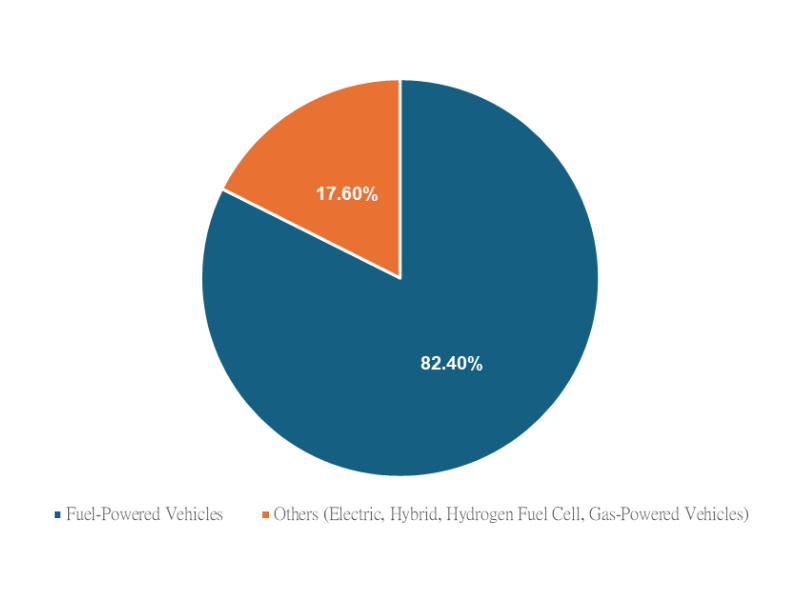
Figure 1. Market Share of India's Automotive Industry in 2025 (Source: IMARC Group, 2026a)
However, the development of electric vehicles in India remains limited. According to NITI Aayog (2025) (Figure 2), electric vehicle sales in India reached 2.008 million units in 2024, including 158,000 electric cars, with a penetration rate of 7.7%, well below the government's target of 30% by 2030. In the same year, global electric vehicle sales totaled 18.78 million units, including 11 million electric cars, with a penetration rate of 16.5%.
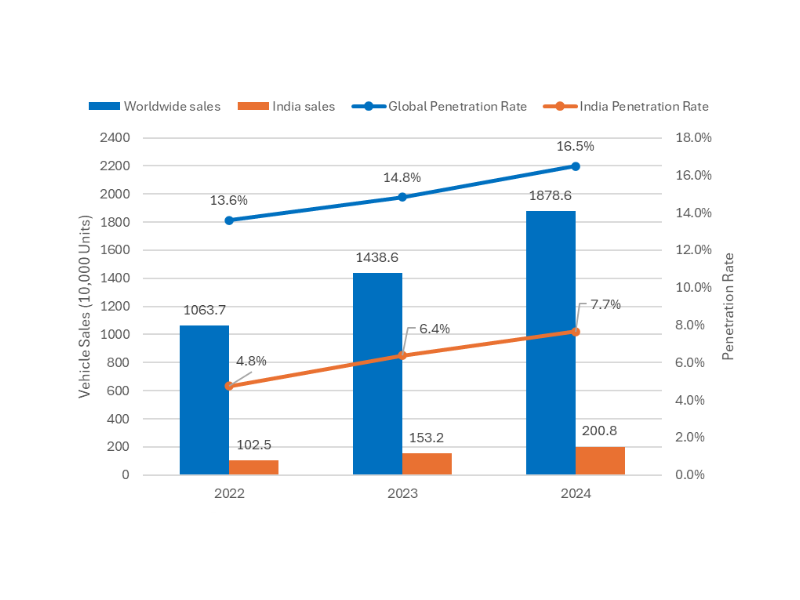
Figure 2. Comparison of Electric Vehicle Sales in India and Worldwide (Compiled from NITI Aayog, 2025, Figures 1 and 2)
India's high vehicle purchase costs and insufficient charging infrastructure have limited the adoption of electric passenger cars and commercial vehicles. In addition, according to a market summary by IMARC Group (2026b), more than 70% of lithium-ion battery cells used in vehicles in India are currently imported from China, South Korea, and Japan.
Overall, conventional fuel-powered vehicles are expected to remain dominant in India's automotive market in the short term, while the development of electric vehicles continues to face significant challenges.
(2) Aerospace Components
The defense industry is a key driver of the aerospace component sector in India. In September 2025, the Indian Ministry of Defence awarded a contract worth INR 623.7 billion (approximately USD 6.55 billion) to Hindustan Aeronautics Limited (HAL) for the procurement of 97 Mk1A Light Combat Aircraft, which have a localization rate exceeding 64%. Deliveries are expected to begin in FY2027-28 and be completed over a six-year period (Ministry of Defence, 2025).
India is also an important global supplier of aerospace components. As of June 2026, Boeing purchases more than USD 1.25 billion worth of products and services from India annually (Boeing India, 2026). Following the China-US leaders' meeting in May 2026, China agreed to purchase 200 Boeing aircraft from the United States (Global Times, 2026), with the possibility of expanding the order to 750 aircraft in the future (PBS News, 2026). In the same month, GE Aerospace (2026) announced an additional investment of INR 1 billion (approximately USD 10.5 million) to expand its facility in Pune, India, in order to increase production capacity.
Overall, supported by growing global aerospace procurement activities, India's aerospace component industry is expected to maintain strong growth momentum, which will further drive demand for high-precision machine tools.
(3) Drones
The drone industry has become a strategically important sector attracting global attention. For example, in France, Renault has partnered with defense companies to produce long-range attack drones with a potential value of EUR 1 billion (Defense News, 2026). A comparison of the global and Indian drone industries is presented in Table 2.
| Region | 2025 Market Size (USD Billion) |
2034 Forecast Market Size (USD Billion) |
CAGR (CAGR) |
|---|---|---|---|
| Global | 339.0 | 791.0 | 9.9% |
| India | 13.2 | 27.3 | 8.5% |
Note: CAGR projections cover the period from 2026 to 2034.
Source: Compiled from IMARC Group (2026c, 2026d).
India is actively promoting the development of its drone industry through a series of strategic goals and policy initiatives (Press Information Bureau, 2025):
- The Goods and Services Tax (GST) on drones and related services was reduced from 18%-28% to 5% in 2025.
- The government launched a Production Linked Incentive (PLI) Scheme to strengthen domestic drone manufacturing.
- India aims to become a global drone hub by 2030.
Defense is a major driver of India's drone industry. According to a market summary by IMARC Group (2026d), the defense sector accounted for 31% of the Indian drone market in 2025, making it the largest application segment. Representative examples include:
- In 2025, the Indian government approved a defense procurement program worth INR 300 billion (approximately USD 3.15 billion), including the planned acquisition of 87 Medium-Altitude Long-Endurance (MALE) drones (The Times of India, 2025).;
- In 2026, the Indian government approved a defense procurement package worth INR 2.38 trillion (approximately USD 25 billion), incorporating Remotely Piloted Strike Aircraft (RPSA) into the Indian Air Force's core equipment portfolio (Ministry of Defence, 2026).
Although the Indian drone market was valued at USD 1.32 billion in 2025, the global drone industry continues to grow rapidly. In the future, India may follow a development path similar to that of the aerospace component industry and emerge as an important global hub for drone manufacturing and supply.
Opportunities and Challenges for Taiwan Machine Tool Components Entering India
Driven by demand from the automotive, aerospace, and defense industries, India's machine tool market continues to grow. According to data from Gardner Intelligence, Global Trade Atlas, and the Industrial Technology Research Institute (ITRI), as cited by the Taiwan Association of Machinery Industry (TMBA, 2025/9), the market situation is as follows (India's fiscal year runs from April 1 to March 31 of the following year):
- In FY2024-25, India's machine tool consumption reached USD 3.62 billion, representing a 15% increase over FY2023-24, making India the world's fourth-largest machine tool consumer, with imports totaling USD 2.58 billion.
- In FY2024-25, India's machine tool production reached USD 1.69 billion, representing an 8.5% increase over FY2023-24, making India the world's ninth-largest machine tool producer. However, domestic production remains insufficient to meet market demand.
(1) Opportunities
India relies heavily on imports for high-end machine tools, resulting in a clear division between the high-end and low-end market segments. For example, Japanese products offer advanced technology but are relatively expensive, while Chinese products are competitively priced but often face concerns regarding stability. In this environment, Taiwan's machine tool components offer several advantages:
- Strong R&D and manufacturing capabilities for key components
- Mid-range products that balance quality, stability, and cost-effectiveness
- Well suited to the equipment upgrade needs of India's small and medium-sized enterprises (SMEs)
(2) Challenges
The challenges of entering the Indian market include:
- Fragmented market: SMEs dominate the market, resulting in low standardization and limited scalability.
- Diverse demand: Specifications vary across industries and regions, leading to higher customization costs.
- Complex regulations: Policies differ between the central government and individual states and may change frequently.
- High logistics costs: Transportation expenses and lower logistics efficiency can affect supply chain performance.
Entry Strategy: Partnership and Localization
When planning a market entry strategy for India, Taiwanese companies should carefully identify and target suitable industries. Key considerations include:
- Industry Selection: Identify industries with strong demand for machine tool applications and analyze the corresponding key components required.
- Product and Market Analysis: Evaluate market demand and usage scenarios, and adapt products to meet the specific needs of the Indian market.
- Local Partnerships: Collaborate with local machine tool manufacturers and proactively propose upgraded machine configurations and solutions.
Taiwanese machine tool component manufacturers entering India must also consider import tariffs. The Indian Ministry of Commerce and Industry revised its government procurement guidelines in 2024, linking bidding preferences to a 50% local content requirement (International Trade Administration, MOEA, 2024). This policy may extend localization pressure from government projects to the broader supply chain. Under the "Make in India" initiative, India is expected to gradually reduce its reliance on imports. Therefore, Taiwanese companies should consider the following localization strategies:
- Initial Market Entry (1–2 Years): Leverage differentiated strengths to quickly enter the market and validate demand.
- Supply Chain Integration (3–5 Years): Integrate into local supply chains, with Taiwan supplying core components while structural parts are produced locally to reduce tariffs and logistics costs.
- Advanced Localization (5–10 Years): Gradually increase the proportion of local sourcing, introduce local production of selected modules, and strengthen leadership in technology and standards.
Localization is no longer limited to manufacturing. After-sales service is equally important in India. Companies should establish local service networks, including maintenance and technical support capabilities, as well as spare parts inventories, to minimize customer downtime and improve service responsiveness.
Conclusion
Taiwanese machine tool component manufacturers should adopt a systematic and phased approach when entering the Indian market. First, companies should focus on industries that align with their core strengths to ensure meaningful opportunities in terms of both market size and technological value. Second, by partnering with local machine tool manufacturers and integrating into existing supply chains, they can reduce market entry barriers and accelerate commercialization.
From a product strategy perspective, Taiwanese suppliers should position themselves in the mid- to high-end segment while leveraging their competitive balance of quality and cost-effectiveness to fill gaps in India's mid-range market. At the same time, products should be adapted to meet customer-specific requirements and local market demands. Operationally, companies should actively pursue localization strategies to reduce tariffs and logistics costs while complying with India's Make in India policy objectives.
In addition, establishing comprehensive after-sales service and technical support capabilities is essential for improving customer loyalty and maintaining equipment reliability. Overall, Taiwanese companies should build their market strategy around technical expertise, operational flexibility, and local integration. By gradually deepening their participation in local supply chains, they can establish long-term competitive advantages and support India's ongoing manufacturing transformation.
As India's manufacturing sector continues to evolve, GPM Co., Ltd. will remain committed to providing key machine tool components that meet the needs of India's industrial development. The company will also continue to offer comprehensive after-sales support and maintain long-term technical cooperation with machine tool manufacturers to address the changing demands of the industry.
References
- Boeing India. (2026). Homepage. Retrieved June 5, 2026, from https://www.boeing.co.in/
- Defense News. (2026, January 20). French carmaker Renault to produce long-range drones for French forces. link
- GE Aerospace. (2026, May 18). GE Aerospace accelerates India manufacturing growth with 100 crore Pune investment. link
- Global Times. (2026, May 20). China's aviation industry will import 200 Boeing aircraft in accordance with commercial principles: MOFCOM. link
- IMARC Group. (2026a). India automobile market: Industry trends, share, size, growth, opportunity and forecast. link
- IMARC Group. (2026b). India electric vehicle market: Industry trends, share, size, growth, opportunity and forecast. link
- IMARC Group. (2026c). Drones market: Global industry trends, share, size, growth, opportunity and forecast. link
- IMARC Group. (2026d). India drones market: Industry trends, share, size, growth, opportunity and forecast. link
- IMARC Group. (2025–2026). India industry and market research reports. https://www.imarcgroup.com/
- Ministry of Defence. (2025). MoD signs Rs. 62,370 crore contract with HAL for procurement of 97 LCA Mk1A aircraft for IAF. link
- Ministry of Defence. (2026). DAC clears proposals worth Rs 2.38 lakh crore to augment defence capabilities. link
- Ministry of Heavy Industries. (2026). Fiscal incentives under PM E-DRIVE scheme. link
- NITI Aayog. (2025, August). Unlocking A $200 Billion Opportunity: Electric Vehicles In India. link
- PBS News. (2026, May 15). Trump says China will buy 200 planes from Boeing, with a possibility of expanding the deal to 750. link
- Press Information Bureau. (2025, September 18). GST Reforms for India's Drone Ecosystem. link
- 經濟部國際貿易署。(2024年7月24日)。印度商工部修訂「2017年政府採購指令(印度製造優先政策)」相關規範。 link
Updated: 2026/09/04