2026 China CNC Machine Tool Show (CCMT): Exhibition Insights and Trend Analysis
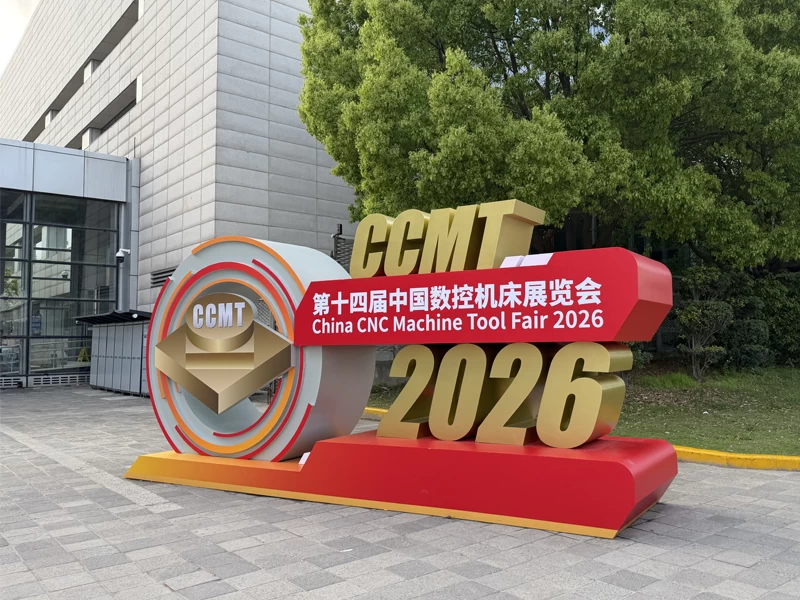
2026 China CNC Machine Tool Show (CCMT): Exhibition Insights and Trend Analysis
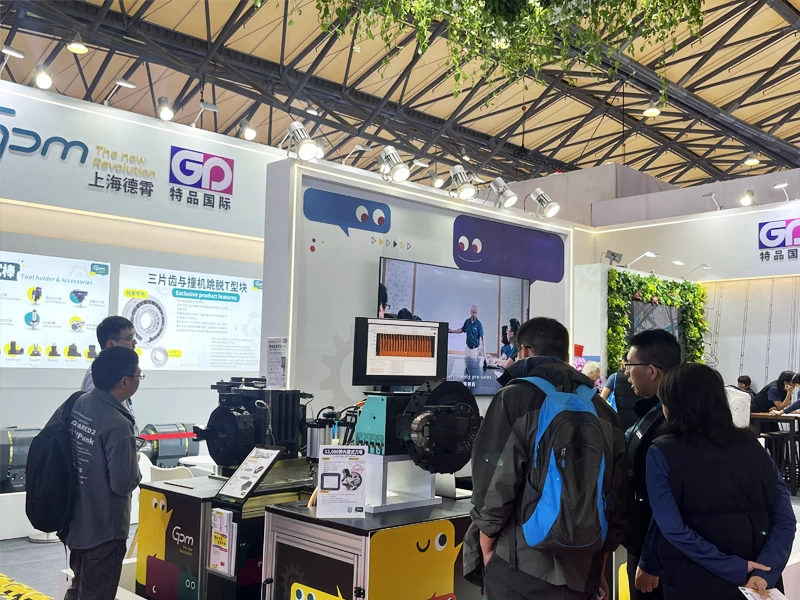
The China CNC Machine Tool Show (CCMT), held every two years, is a key platform for assessing trends in China’s machine tool industry. CCMT 2026 revealed clear momentum toward domestic substitution and technological self-reliance. Compared with CCMT 2024, the exhibition featured a notable increase in 5-axis and turn-mill machines. It also showcased more integrated Flexible Manufacturing System (FMS) solutions and broader CNC system applications, suggesting a shift in market focus toward system-level integration. Supported by policy initiatives and rapid growth in related industries, China has long pursued a leapfrogging development model, accelerating adoption of mid- to high-end equipment. Based on on-site observations and supporting data, this report examines 3 main trends highlighted at the show—integration, systemization, and automation—to provide practical insights for industry planning and strategic decision-making. As a key supplier of machine tool components, GPM will continue strengthening its capabilities in product technology, application-driven solutions, system integration, and technical collaboration, while deepening cooperation with machine tool builders to meet evolving industry needs.
Trend 1: Growth of 5-Axis and Turn-Mill Machines
At CCMT 2026, China’s machine tool industry showed a clear shift from standalone machine performance to high-precision, multi-process machining. Representative exhibits included 5-axis machining centers and 5-axis turn-mill machines, both of which increased notably compared with CCMT 2024 (see Table 1). Chinese-made machine tools accounted for about 50%–60% of the total on display. In some cases, domestic 5-axis machining centers have reached international standards and entered high-end supply chains.
Table 1. Exhibit Count of 5-Axis Machining Centers and Turn-Mill Machines
| Machine Type | CCMT 2024 | CCMT 2026 |
| 5-axis machining center | Approx. 170–180 units | 235 units |
| 5-axis turn-mill machine | Approx. 20–30 units | 53 units |
Source: China Machine Tool & Tool Builders Association (2026)
China’s machine tool industry has been driven by 2 main forces: strong policy support and steady demand from downstream industries. Together, these factors continue to accelerate the development of high-end machine tools, CNC systems,and core functional components.
Policy support: The Chinese government has established the Machine Tools Industry Investment Fund. Its Phase I is approximately RMB 15 billion, or about USD 2.1 billion, to support the development of high-end machine tools, CNC systems, and core functional components.
Demand drivers: Stable demand from key downstream sectors continues to support machine tool adoption, especially in the following areas:
- New energy vehicles (NEVs): Sustained demand for high-efficiency, highly consistent precision components
- Aerospace: Rising demand for structural parts and high-reliability components
- Robotics and drones: Increasing need for compact, high-precision, and diversified components
These sectors share 2 important characteristics: long product life cycles and strict requirements for machining stability. Both factors support continued demand for 5-axis machining centers and 5-axis turn-mill machines. At the same time, China’s Outline of the 15th Five-Year Plan for National Economic and Social Development (2026–2030) emphas breakthroughs in critical core technologies across key industries, including machine tools. This suggests that the industry will continue advancing toward greater technological self-reliance, higher precision, and more sophisticated high-end capabilities.
Trend 2: AI-Driven Growth in Swiss-Type CNC Lathes
Swiss-type CNC lathes have become one of the fastest-growing machine categories in recent years. By combining turning, milling, drilling, and tapping in a single platform, they are well suited for high-volume production of small, precise, and geometrically complex components. Compared with CCMT 2024, exhibits at CCMT 2026 highlighted several notable advances.
- Machine capability upgrades: Some new models can support up to three tool groups operating simultaneously and independently, improving process integration and productivity.
- Tooling enhancements: B-axis live tooling enables more complex operations, such as angled holes, inclined surfaces, and curved features.
- Performance improvements: Thermal compensation has begun appearing in some models, helping improve machining stability and accuracy.
Market demand shift
Demand for Swiss-type lathes has traditionally come from industries such as automotive, electronics, and instrumentation. In recent years, however, a major new growth driver has emerged: liquid cooling connectors for AI servers.
Why demand is rising: As AI applications expand, server power consumption continues to increase. Traditional server racks typically consumed about 5–10 kW, while mainstream AI server racks now operate at about 15–40 kW. High-end systems can reach 40–120 kW.
Because conventional air cooling can no longer meet these thermal requirements, liquid cooling is becoming a standard configuration for AI servers. This shift has made liquid cooling connectors one of the fastest-growing component categories.
According to TrendForce estimates (see Table 2), global AI server shipments reached about 2 million units in 2025 and are expected to grow by about 28% year over year in 2026. Liquid cooling penetration is estimated at about 33% in 2025 and is projected to rise to about 40% in 2026. Based on an estimated 14–16 liquid cooling connectors per server rack, total connector demand is expected to reach tens of millions of units in both 2025 and 2026.
Table 2. Estimated AI Server Shipments and Liquid Cooling Connector Demand
| Year | AI Server Shipments | Liquid Cooling Technology Penetration |
| 2025 | Approx. 2M units | 33% |
| 2026 | Approx. 2.5M units (28% YoY growth est.) |
40% |
Source: TrendForce (2025, 2026)
Why Swiss-type lathes fit this application: Liquid cooling connectors are typically small, slender, multi-stepped parts with complex internal threads. These features align well with the strengths of Swiss-type lathes, which are designed for high-precision, high-volume production. They can machine these complex geometries in a single setup with strong stability and limited deformation. As demand for liquid cooling connectors grows, this strong fit between part requirements and machining capability is driving further demand for Swiss-type lathes.
Production and market implications: Liquid cooling connectors have already entered large-scale application and are becoming increasingly standardized products. As a result, the market is defined by several key characteristics:
- High production volumes
- Tight delivery requirements
- Strong manufacturing readiness in China, supported by an established equipment base
These conditions allow manufacturers in China to respond quickly to new orders and scale output efficiently. In turn, growing liquid cooling connector demand supports higher capacity utilization and further increases demand for Swiss-type lathes.
Trend 3: High-Precision Grinding Emerges as a Robotics-Driven Opportunity
At CCMT 2026, several manufacturers in China signaled growing interest in the high-precision grinding segment. On-site exhibits included a range of core grinding-related components, indicating that domestic players are beginning to explore this field more actively. However, most of these efforts still appear to be at the component demonstration or technical validation stage rather than at full mass-production readiness.
Key developments observed at the show included the following:
- High-precision components such as wafer grinding spindles, hydrostatic spindles, and aerostatic spindles were displayed on-site.
- Some exhibitors also presented high-precision bearings designed for humanoid robots.
- Despite this progress, most solutions remain in early-stage development and have not yet matured into mass-production-ready offerings.
Why robotics is driving this trend: Growth in humanoid and quadruped robots is increasing demand for precision-machined core components that require extremely high dimensional accuracy and consistency.
- Robotics applications increasingly depend on components such as joint reducers, high-precision miniature bearings, and transmission shafts.
- According to TrendForce, China’s humanoid robot production is projected to grow by 94% year over year in 2026.
- TrendForce also noted that a leading manufacturer has announced planned annual capacity of approximately 75,000 humanoid robots and 115,000 quadruped robots, underscoring supply-chain expansion ahead of commercialization.
As robotics applications continue to expand, demand for precision machining is expected to rise across the manufacturing value chain, creating broader opportunities for related components and processes. Against this industry background, high-precision grinding is likely to become an increasingly important development area for China’s machine tool industry.
Trend 4: Automation Shifts from Standalone Equipment to Integrated Systems
CCMT 2026 highlighted a clear shift toward more complete Flexible Manufacturing System (FMS) solutions. Rather than presenting automation as a set of isolated tools, many exhibitors showcased integrated systems designed to improve machining precision, process continuity, and production flexibility. Typical FMS configurations included the following components:
- 5-axis machining center or turn-mill machine
- Automatic pallet changer (APC)
- Articulated robot or gantry system
- Autonomous mobile robot (AMR)
The rise of FMS is closely tied to structural shifts in manufacturing demand in China. As competition intensifies, manufacturers increasingly need production solutions that can support high-mix, low-volume work while still delivering strong precision and efficiency. Under these conditions, traditional single-function equipment is becoming less suitable, while multi-process integration and system-level automation are gaining importance.
This shift was reflected in the exhibits at CCMT 2026. Many companies moved beyond highlighting individual machines or isolated performance indicators and instead emphad high-precision, one-stop machining solutions supported by scalable automation systems. At the same time, FMS adoption is gradually expanding from large enterprises to small and medium-d manufacturers.
How adoption typically progresses: In practice, many manufacturers implement FMS in stages rather than through full-system deployment from the start.
- Starting with standalone machines (e.g., 5-axis machining centers or turn-mill machines)
- Introducing APCs as an initial step
- Gradually integrating articulated robots or gantry systems
- Finally deploying AMRs based on specific factory needs
Overall, FMS implementation is moving away from all-at-once deployment toward a modular, step-by-step model that offers greater flexibility and lowers initial adoption barriers. CCMT 2026 also showed early efforts by Chinese manufacturers to promote compact, simplified FMS units tailored to specific machining scenarios. Although broader market adoption remains uncertain, these developments suggest that automation systems once concentrated in large-scale manufacturing are beginning to extend into the small and medium-d segment.
Trend 5: Emerging Competition from Chinese CNC Systems and Thermal Compensation Adoption
At CCMT 2026, competition in CNC systems appeared to shift beyond machine-level hardware performance toward higher-value control functions and algorithm capabilities. Although international brands still dominate China’s mid- to high-end segment—holding an estimated 70% share—the growing use of 5-axis machining centers is making advanced control performance increasingly important. In this environment, competition is centering more clearly on software-driven and control-intensive capabilities rather than on machine specifications alone.
Core areas of competition are increasingly concentrated in the following capabilities:
- Multi-axis control for increasingly complex 5-axis machining tasks
- Real-time processing to support stable and responsive machine operation
- Precision compensation functions that help sustain machining accuracy
Despite the continued strength of international brands in high-end applications, China’s CNC system industry is making steady progress toward domestic substitution. At CCMT 2026, exhibitors such as Huazhong CNC and Guangzhou CNC presented systems with functions including multi-axis machining and thermal compensation. Some systems also demonstrate built-in CAM capabilities that allow users to import DXF files directly and generate toolpaths and G-code within the controller software, improving process integration and reducing workflow complexity.
Even so, on-site feedback from machine tool manufacturers at CCMT 2026 suggests that end-user acceptance of domestically developed Chinese CNC systems is still limited. To address this gap, some Chinese suppliers are considering expansion into the education and training market, where broader exposure could help build familiarity, user confidence, and long-term adoption. Over time, stronger presence in academic and training environments could translate into greater competitive pressure on established international brands.
Thermal compensation moves toward broader adoption
Thermal compensation is also being adopted more widely and is no longer limited to premium machine tools from Europe, the United States, and Japan. It is increasingly being integrated into automated production lines as part of closed-loop control, making it an important enabler of machining stability and unmanned production. At CCMT 2026, more Chinese machine tools featured thermal compensation functions, signaling a shift from high-end optional feature to broader standard configuration. Based on on-site observations, Huazhong CNC’s thermal compensation already supports basic standalone operation, but it still trails FANUC in advanced functions such as centralized multi-machine management and program-specific compensation control.
Overall Development Trends and Conclusion
Based on observations from CCMT 2026, the development of 5-axis machining centers, 5-axis turn-mill machines, and Swiss-type lathes reflects sustained downstream demand for high-precision, stable, and flexible machining. Growth in sectors such as aerospace, new energy, AI infrastructure, and advanced automation is continuing to raise requirements for machining capability, consistency, and integration across the machine tool value chain.
Broader development direction: CCMT 2026 suggests that China’s machine tool industry is advancing along 3 closely related dimensions:
- Integration: Wider adoption of multi-process, high-precision equipment such as 5-axis and turn-mill machines
- Systemization: Growing emphasis on FMS, CNC control capability, and coordinated production systems
- Automation: Broader use of thermal compensation, robotics, and scalable automation to improve stability and production efficiency
Supported by policy initiatives and emerging industrial demand, China’s machine tool sector continues to follow a leapfrogging development path. As technical capabilities in precision, machining stability, and control performance improve, barriers to entry for mid- to high-end equipment are gradually lowering. This is accelerating broader adoption while also narrowing the capability gap with established international standards in Europe and Japan. In some cases, China domestically produced 5-axis machines have already entered high-end supply chains in sectors such as aerospace and new energy.
GPM’s strategic response: As the machine tool sector evolves, the role of key components in overall machining performance is becoming increasingly important. In response, GPM will continue strengthening its development in the following 4 areas:
- Product technology: Advance key component development with a focus on performance stability, reliability, and adaptability across diverse machining applications.
- Application orientation: Strengthen alignment between component design and specific machining requirements to support complex and high-precision processes.
- System integration: Improve compatibility with CNC systems and automation platforms to support the development of integrated manufacturing solutions.
- Technical collaboration: Deepen long-term technical collaboration with machine tool builders that show strong development potential.
As the industry continues advancing toward greater integration, systemization, and automation, GPM will remain focused on providing key machine tool components aligned with market needs and on building stable, long-term technical collaboration with machine tool builders to support evolving manufacturing requirements.
References
China Machine Tool & Tool Builders Association. (March 12, 2026). CCMT 2026 Highlights: From “Manufacturing” to “Intelligent Manufacturing” — A New Landscape for the Global Machine Tool Industry. Retrieved from https://mp.weixin.qq.com/s/rADwR6voJfoOcQXBLuEwOQ
China Machine Tool & Tool Builders Association. (April 8, 2026). Overview of Selected Lathe Exhibits at CCMT 2026. Retrieved from http://www.ccmtshow.com/197001/10373.html
TrendForce. (January 20, 2026). Global AI server shipments forecast to grow over 28% YoY in 2026, with a rising share of ASIC-based systems. Retrieved from https://www.trendforce.com/presscenter/news/20260120-12887.html
TrendForce. (July 2, 2025). Geopolitical tensions and US export restrictions slightly temper AI server shipment growth in 2025. Retrieved from https://www.trendforce.com/presscenter/news/20250702-12630.html
TrendForce. (August 21, 2025). Liquid cooling to scale in AI data centers, penetration to surpass 30% in 2025. Retrieved from https://www.trendforce.com/presscenter/news/20250821-12682.html
TrendForce. (April 9, 2026). TrendForce: China’s humanoid robot production is projected to grow by 94% in 2026. Retrieved from https://www.trendforce.cn/presscenter/news/20260409-13006.html
Updated: 2026/08/21